
PLC Automation Panels: The Backbone of Modern Industrial Process Control
Lead Engineer
Technical Team
Understanding PLC Automation in Modern Industries
Industrial automation has significantly transformed modern manufacturing and process industries by improving operational efficiency, precision, safety, and overall productivity. Among the core technologies driving this transformation, PLC Automation Panels (Programmable Logic Controller panels) play a vital role in controlling and automating machines, production lines, and complex industrial processes with high reliability and accuracy.
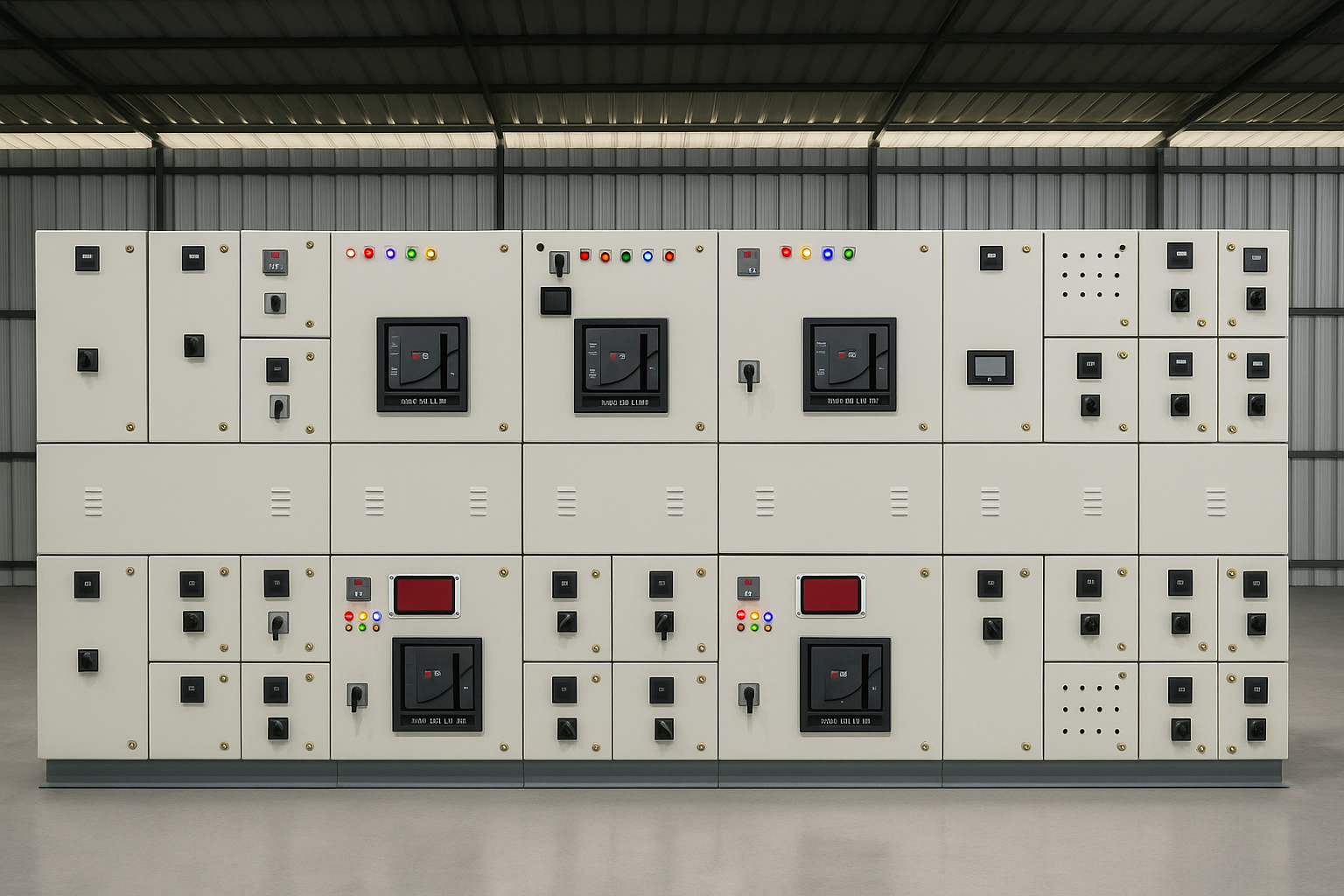
A PLC Automation Panel is an integrated control system that combines programmable logic controllers, relays, sensors, timers, contactors, circuit protection devices, and communication modules into a single structured enclosure. It continuously monitors input signals from field devices and processes them according to pre-programmed logic to generate precise output actions in real time, ensuring smooth coordination of industrial operations.
These systems eliminate the dependency on manual control by executing predefined logical sequences that manage a wide range of equipment such as motors, conveyor systems, pumps, compressors, valves, and robotic machinery. PLC panels are designed to handle complex automation tasks, reduce human error, and ensure consistent performance even in harsh industrial environments where precision and reliability are critical.
With continuous advancements in automation and Industry 4.0 technologies, PLC panels now support remote monitoring, SCADA integration, IoT connectivity, and data-driven decision-making. This enables industries to improve production efficiency, minimize downtime, optimize resource utilization, and achieve higher levels of operational intelligence and process reliability.
What is a PLC Automation Panel?
Definition
A PLC automation panel is an electrical control panel that uses a programmable logic controller (PLC) to automate and control industrial machinery and processes.
Formula
Automation Efficiency = Output Production / Manual Effort
Ideal Value
High system reliability and automated process control
Acceptable Range
24/7 stable operation with minimal downtime
Common Challenges Without PLC Automation
PLC automation eliminates these problems by enabling intelligent and programmable process control.
Why PLC Automation is Important
PLC panels ensure accurate and reliable control of industrial processes by continuously monitoring inputs and executing programmed logic.
How PLC Automation Panels Work
PLC panels collect input signals from sensors and switches, process them through programmed logic, and control output devices such as motors, valves, and alarms.
Main Components of a PLC Automation Panel
PLC Controller
Processes input signals and executes automation logic
HMI (Human Machine Interface)
Provides user interface for monitoring and control
Relays and Contactors
Control electrical loads
Sensors and Input Devices
Provide real-time data to PLC system
Power Supply Unit
Supplies power to PLC and control devices
Communication Modules
Enable data exchange with SCADA or other systems
Types of PLC Automation Panels
Before APFC
After APFC
Savings Achieved
20% – 40% increase in operational efficiency
Benefits of Installing PLC Automation Panels
Industries That Use PLC Automation Panels
Maintenance & Best Practices
Conclusion
PLC automation panels are essential for modern industrial automation. They provide reliable process control, improve productivity, and reduce operational costs. Investing in a well-designed PLC automation system ensures efficient and scalable industrial operations.